When temperatures soar, skipping your dog's usual walk can feel frustrating—for both of you. Fortunately, physical exercise isn't the only way to keep a dog happy and fulfilled. Mental enrichment can be just as important, and in many cases, a short brain workout leaves dogs more relaxed than a long walk.
The key is replacing outdoor activity with safe indoor experiences that encourage your dog's natural behaviors, including sniffing, searching, licking, chewing, and problem-solving. Veterinary organizations recognize enrichment as an essential part of a dog's overall well-being because it helps reduce boredom, frustration, and unwanted behaviors.
Here's how to keep your dog engaged while staying cool.
Why Mental Stimulation Matters
Dogs don't simply need exercise—they need opportunities to use their brains.
A typical walk provides much more than physical movement. Dogs investigate scents, observe their surroundings, solve small problems, and experience new environments. When hot weather limits those opportunities, boredom may appear as:
- Excessive barking
- Chewing household items
- Digging indoors
- Restlessness
- Constant attention-seeking
- Difficulty settling down
Providing different types of enrichment throughout the day helps satisfy these natural needs and may reduce stress-related behaviors.
Is It Really Too Hot for a Walk?
On very warm days, especially when humidity is high, outdoor exercise can quickly increase a dog's risk of overheating. Certain dogs—including brachycephalic breeds, puppies, senior dogs, overweight dogs, and pets with heart or respiratory conditions—are especially vulnerable.
If you do need to go outside:
- Walk early in the morning or after sunset.
- Keep bathroom breaks brief.
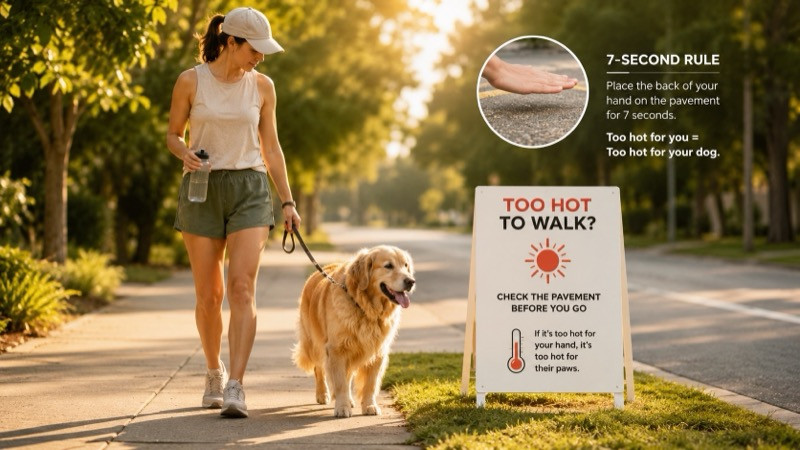
- Check pavement with the back of your hand. If it feels too hot for several seconds, it's too hot for your dog's paws.
- Always provide fresh drinking water.
If your dog shows excessive panting, weakness, vomiting, collapse, or difficulty breathing, move them to a cool area and contact a veterinarian immediately. Heatstroke is a medical emergency.
1. Turn Mealtime into a Brain Game
Instead of serving meals in a regular bowl, let your dog work for their food.
Great options include:
- Puzzle feeders
- Snuffle mats
- Scatter feeding
- Treat-dispensing toys
- Slow feeders
Searching and solving problems naturally engages your dog's brain while slowing eating.
If your dog is new to puzzles, start with simple challenges and gradually increase the difficulty as they gain confidence.
2. Create a Sniffing Treasure Hunt
A dog's nose is extraordinary, making scent games one of the easiest forms of enrichment.
Try hiding small treats:
- Behind furniture
- Under cups
- Inside cardboard boxes
- Around one room
- Throughout the house for experienced dogs
Begin with easy hiding places, then gradually make the game more challenging.
Because sniffing is mentally demanding, even a short session can leave many dogs pleasantly tired.
3. Freeze Treats for Longer Entertainment
Frozen enrichment serves two purposes:
- Keeps dogs occupied
- Helps them stay comfortable on warm days
You can freeze:
- Wet dog food
- Plain pumpkin puree
- Plain unsweetened yogurt, if tolerated
- Dog-safe fruit purees
- Water with treats inside toys
Lick mats and stuffed food toys encourage slow licking, which many dogs find calming.
Remember to account for treats as part of your dog's daily calorie intake.
4. Practice Short Training Sessions
Training doesn't always mean teaching complicated tricks.
Spend five to ten minutes working on:
- Sit
- Down
- Stay
- Touch
- Hand targeting
- Recall practice indoors
- Settle on a mat
- Spin
- Shake
- Go to bed
Short, positive sessions using rewards help build confidence while exercising your dog's mind.
Reward-based training is generally more effective and humane than punishment-based methods.
5. Rotate Toys Instead of Leaving Them All Out
Dogs can lose interest when the same toys are always available.
Instead:
- Store most toys away.
- Offer only a few at a time.
- Swap them every few days.
This simple rotation can make familiar toys feel exciting again without buying anything new.
6. Play Hide-and-Seek
Hide-and-seek strengthens your dog's recall while providing mental stimulation.
You can:
- Hide yourself.
- Hide a favorite toy.
- Hide treats.
Call your dog's name once and reward them enthusiastically when they find the target.
Start easy before making the game more challenging.
7. Build a Simple Indoor Obstacle Course
Household items work well for safe indoor challenges.
For example:
- Walk around chairs.
- Step over broom handles placed on the floor.
- Crawl under a table.
- Pause on a towel or mat.
- Weave between boxes.
Always keep obstacles low and stable, and avoid jumping games on slippery flooring.
8. Offer Safe Chewing Opportunities
Chewing is a natural canine behavior.
Appropriate chew options may help dogs relax while providing additional enrichment.
Always:
- Choose products suitable for your dog's size.
- Supervise new chew items.
- Remove damaged toys.
- Follow manufacturer recommendations.
9. Introduce New Scents
Novel scents can provide interesting enrichment without requiring much space.
You might:
- Bring in dog-safe herbs from the garden.
- Hide scented cloths around a room.
- Let your dog investigate safe natural objects collected outdoors.
Allow your dog to explore at their own pace without forcing interaction.
10. Keep Sessions Short and Varied
Many owners assume dogs need one long activity to replace a walk.
In reality, several short enrichment sessions spread throughout the day often work better.
Morning
- Puzzle feeder
- Five-minute training session
Midday
- Frozen lick mat
- Quiet chew time
Afternoon
- Scent game
- Indoor hide-and-seek
Evening
- Brief outdoor potty break when temperatures are cooler
- Calm toy play
Variety helps prevent boredom and keeps activities interesting.
Common Mistakes to Avoid
Some well-intentioned activities can accidentally create frustration or increase the risk of overheating.
Avoid:
- Intense indoor exercise that causes heavy panting
- Overfeeding treats during enrichment
- Leaving dogs unsupervised with unsafe chew items
- Making puzzles so difficult your dog gives up
- Exercising outdoors simply to "burn energy" during dangerous heat
Remember that the goal is a calm, satisfied dog—not an exhausted one.
Adjust Activities for Your Dog
Every dog is different.
Consider your dog's:
- Age
- Breed
- Health status
- Energy level
- Previous training
- Confidence with new activities
Puppies often enjoy short, frequent games, while senior dogs may prefer gentle scent work and food puzzles. Dogs with medical conditions may need activity recommendations tailored by their veterinarian.
Frequently Asked Questions
Can mental stimulation replace a walk?
Not permanently. Dogs still benefit from safe outdoor exploration when weather permits, but indoor enrichment is an excellent alternative during periods of extreme heat.
How much indoor enrichment does my dog need?
Many dogs enjoy several short sessions throughout the day. Even 10–15 minutes of focused mental activity can be surprisingly satisfying.
Are puzzle feeders suitable for every dog?
Most dogs can learn to use puzzle feeders. Start with easy versions and increase the challenge gradually to avoid frustration.
What if my dog isn't interested in enrichment toys?
Experiment with different rewards, rotate toys, and begin with very simple activities. Many dogs become more engaged as they learn how the games work.
Should I still take my dog outside during hot weather?
Yes, for necessary bathroom breaks and, when conditions are safe, short walks during cooler parts of the day. Avoid strenuous exercise during periods of extreme heat and watch for signs of overheating.
Conclusion
When summer temperatures make walks unsafe, your dog's daily routine doesn't have to stop—it just needs to change. Indoor enrichment offers a safe, enjoyable way to meet your dog's mental and emotional needs while reducing the risk of heat-related illness.
Simple activities such as scent games, puzzle feeders, frozen treats, short training sessions, and toy rotation can transform a hot day indoors into a rewarding experience. By mixing different forms of enrichment and adjusting activities to your dog's age, health, and personality, you can help them stay happy, engaged, and comfortable until cooler weather returns.
For more practical dog-care guides, training tips, and enrichment ideas, explore the latest articles from Happy Paw Studio.
Sources
- American Animal Hospital Association: Boredom Busters—Indoor Enrichment for Dogs
- American Animal Hospital Association: Enrichment—Supporting Your Pet's Mental and Emotional Wellbeing at Home
- American Animal Hospital Association: How to Prevent Heatstroke in Dogs and Cats
- Humane Society Silicon Valley: Summer Enrichment Guide
Get Printable Dog Planners & Trackers at Happy Paw Studio
Looking for instant printable dog health logs, pet care planners, and daily routine journals? Visit our Etsy store to download yours today!
Shop HappyPawStudio1 on Etsy →