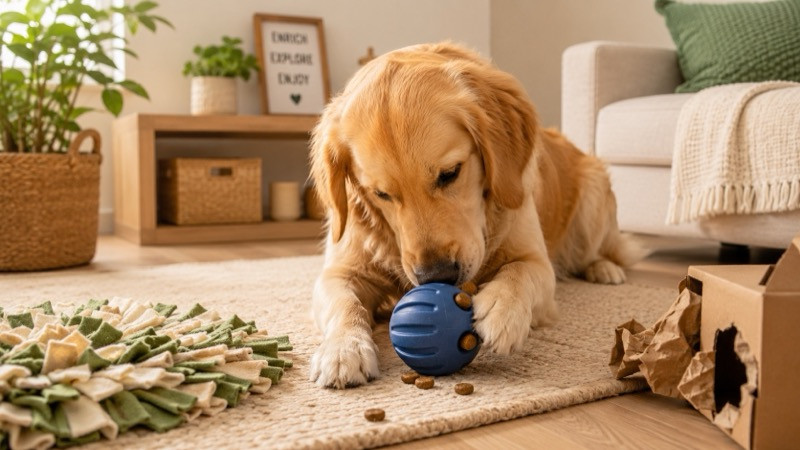
Introduction
If your dog chews furniture, raids the trash, digs up the yard, or constantly demands attention, they may not simply be “misbehaving”—they could be bored.
Dogs are intelligent, curious animals that need both physical exercise and mental stimulation. While daily walks are important, many dogs also benefit from activities that encourage them to sniff, solve problems, explore, and learn. Veterinary behavior experts note that mental enrichment can help dogs cope better with routine changes and may reduce boredom-related behaviors such as excessive barking, destructive chewing, and restlessness. American Kennel Club
The good news? You don’t need expensive equipment or hours of free time.
Here are 25 easy enrichment ideas you can start using today.
What Is Dog Enrichment?
Enrichment means providing opportunities for your dog to engage in natural behaviors that stimulate both the brain and body.
This can include:
- Sniffing
- Searching
- Solving puzzles
- Learning new skills
- Exploring different environments
- Chewing safely
- Playing appropriately
Different dogs enjoy different activities, so variety is often more effective than repeating the same game every day.
Why Enrichment Matters
Mental enrichment offers benefits beyond keeping your dog occupied.
Appropriate enrichment can help:
- Reduce boredom
- Encourage confidence
- Channel natural instincts
- Improve focus during training
- Strengthen your relationship
- Make daily routines more enjoyable
Enrichment works best alongside appropriate exercise, rest, and consistent, reward-based training. It is not a replacement for meeting your dog’s basic physical and emotional needs. American Kennel Club
25 Easy Dog Enrichment Ideas
1. Scatter Feed Breakfast
Instead of serving food in a bowl, scatter kibble across clean grass or a safe indoor surface and let your dog sniff it out.
2. Use a Snuffle Mat
Hide kibble or treats inside a snuffle mat to encourage natural foraging behavior.
3. Stuff a Food Toy
Fill a food-dispensing toy with part of your dog’s regular meal. Freezing it can make the activity last longer for dogs that finish quickly.
4. Rotate Toys Weekly
Rather than leaving every toy out, store some away and swap them every few days. Rotating toys often renews your dog’s interest without buying anything new. This is a popular tip among experienced owners. Community discussion
5. Play Hide and Seek
Ask your dog to stay, hide elsewhere in the house, then call them to find you.
6. Teach One New Trick
Spend five minutes teaching:
- Spin
- Shake
- Bow
- Touch
- Roll over
Short, positive sessions can be surprisingly tiring because they engage your dog’s brain.
7. Make Mealtime a Training Session
Instead of placing the bowl down immediately, use part of your dog’s meal to practice simple cues like sit, down, or hand target. This turns an everyday routine into an enriching learning opportunity. American Kennel Club
8. Create a Cardboard Treasure Box
Place crumpled paper, safe toys, and kibble inside a cardboard box for supervised exploration.
Remove staples, tape, and small pieces that could be swallowed.
9. Try a Frozen Lick Mat
Spread a dog-safe food such as plain canned dog food or another veterinarian-approved option on a lick mat and freeze it for a longer-lasting activity.
10. Practice Nose Work
Hide treats around one room and encourage your dog to “Find it!”
Increase the difficulty gradually.
11. Explore a New Walking Route
New smells provide valuable mental stimulation, even if the walk is shorter than usual.
12. Add Training Breaks During Walks
Ask for sits, hand targets, or brief recalls throughout the walk.
13. Let Your Dog Sniff
Not every walk has to be about covering distance.
Allowing safe opportunities to sniff can provide meaningful mental enrichment.
14. Build a DIY Obstacle Course
Use cushions, broom handles, chairs, and boxes to create simple challenges.
Always prioritize safety and avoid forcing hesitant dogs.
15. Play “Which Hand?”
Hide a treat in one hand and let your dog guess.
16. Offer Safe Chewing Opportunities
Appropriate chew items can satisfy natural chewing instincts.
Choose products suitable for your dog’s size and chewing style, and supervise as recommended.
17. Practice Settle Training
Reward calm behavior on a mat or bed.
Learning to relax is an important life skill.
18. Introduce New Textures
Allow your dog to safely investigate different surfaces such as grass, sand, leaves, or smooth pavement if they are comfortable doing so.
19. Have a Play Date
For dogs that enjoy social interaction, a well-matched play session with another friendly, healthy dog can provide both mental and physical stimulation.
20. Teach Name Recognition for Toys
Practice asking your dog to find a specific toy.
Some dogs enjoy learning object names over time.
21. Create a Backyard Sniff Trail
Drag a treat or scatter tiny food rewards along a short path for your dog to follow with their nose.
22. Use Everyday Objects
Plastic bottles with caps and rings removed, paper towel tubes, and cardboard boxes can become simple supervised puzzle activities.
23. Give Your Dog a Job
Ask them to carry a lightweight toy, retrieve an item, or help tidy up toys after play.
Many dogs enjoy having a purpose.
24. Schedule Quiet Enrichment
Not every activity needs excitement.
Licking, sniffing, chewing safely, and calm puzzle-solving can help some dogs settle after busy periods.
25. End the Day With a Brain Game
Five to ten minutes of gentle training or scent work before bedtime may leave your dog feeling mentally satisfied without overstimulating them.
Matching Enrichment to Your Dog
Puppies
Keep sessions short, positive, and age-appropriate. Puppies tire mentally quite quickly and benefit from frequent, gentle learning opportunities. American Kennel Club
Adult Dogs
Mix physical exercise with problem-solving, training, and scent games.
Senior Dogs
Choose lower-impact enrichment such as scent work, food puzzles, gentle training, or slow walks while considering any mobility limitations. If your senior dog shows new restlessness or behavior changes, consult your veterinarian to rule out medical causes.
Signs Your Dog Needs More Enrichment
Your dog may benefit from additional mental stimulation if they frequently:
- Chew household items
- Bark for attention
- Dig excessively
- Pace around the house
- Constantly seek entertainment
- Become restless despite appropriate exercise
These behaviors can have many causes, including anxiety, frustration, or medical issues. If they are severe, sudden, or persistent, seek advice from your veterinarian or a qualified, reward-based behavior professional. American Kennel Club
Common Mistakes to Avoid
Doing Too Much Too Soon
Introduce new enrichment gradually.
Relying Only on Physical Exercise
Longer walks alone may not meet every dog’s mental needs.
Using Difficult Puzzles Immediately
Start easy and increase the challenge as your dog gains confidence.
Leaving Unsafe Items Unsupervised
Always supervise when introducing new enrichment activities or chew items.
Repeating the Same Activity Every Day
Variety helps keep enrichment engaging.
Frequently Asked Questions
How much enrichment does my dog need each day?
There is no one-size-fits-all answer. Age, breed, personality, health, and energy level all influence how much enrichment a dog enjoys. Even 10–20 minutes of focused mental activity can make a meaningful difference for many dogs.
Can enrichment replace walks?
No.
Mental stimulation complements physical exercise but does not replace opportunities for movement, toileting, and exploring the outdoors when appropriate.
Are food puzzles suitable every day?
Yes, many dogs enjoy using puzzle feeders or slow feeders as part of their regular meals, provided they receive an appropriate daily food amount. American Kennel Club
Is destructive chewing always caused by boredom?
No.
Chewing may also be related to teething, anxiety, stress, normal canine behavior, or medical issues. Consider the full picture and consult your veterinarian if you have concerns.
What is the easiest enrichment activity to start today?
Scatter feeding, sniff walks, hide-and-seek, and five-minute training sessions are simple, inexpensive options that work well for many dogs.
Conclusion
Dog enrichment doesn’t have to be expensive or complicated. Small changes—like turning mealtime into a puzzle, allowing extra sniffing on walks, or teaching a new trick—can help keep your dog’s mind active and encourage healthy, natural behaviors.
Remember that enrichment works best as part of a balanced routine that includes exercise, rest, positive training, and quality time together. By offering a variety of safe and engaging activities, you can help your dog stay curious, confident, and content.
Explore more practical dog care tips and positive training guides from Happy Paw Studio to keep learning alongside your canine companion.
Sources
- American Kennel Club – Mental stimulation, boredom, enrichment, and training guidance
- Community discussion on enrichment toy rotation and non-food enrichment ideas — used for practical inspiration only, not medical guidance.
Get Printable Dog Planners & Trackers at Happy Paw Studio
Looking for instant printable dog health logs, pet care planners, and daily routine journals? Visit our Etsy store to download yours today!
Shop HappyPawStudio1 on Etsy →