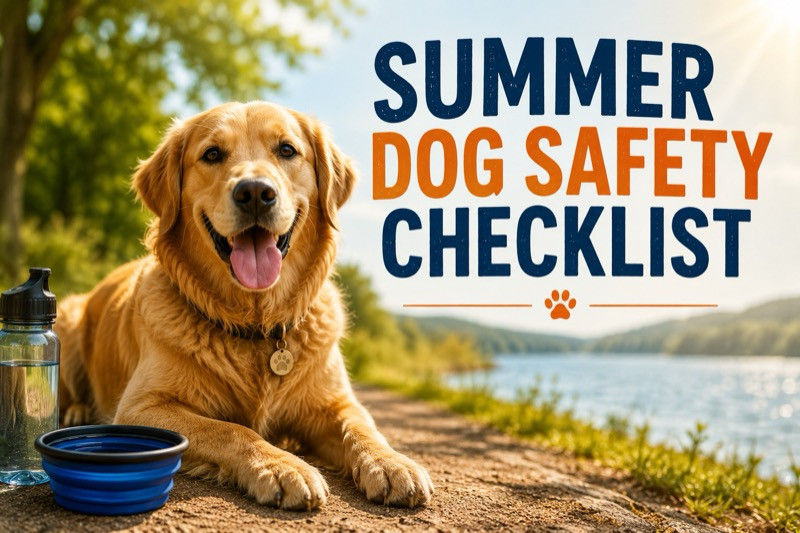
Summer can bring longer walks, family trips, garden time, and outdoor adventures with your dog. It can also introduce serious risks, including overheating, burned paw pads, dehydration, unsafe car travel, and accidental exposure to unfamiliar foods or environments.
The most important summer dog-safety rule is simple: adjust the day around the weather rather than expecting your dog to follow their normal routine in extreme heat.
Check both the temperature and humidity, schedule activity during cooler hours, provide constant access to fresh water and shade, and never leave a dog unattended in a parked vehicle. High humidity makes it harder for dogs to cool themselves through panting, even when the air temperature does not appear extreme.
This practical checklist will help you plan safer walks, outings, journeys, and days at home.
Why Hot Weather Is Dangerous for Dogs
Dogs regulate body temperature differently from people. Panting is their primary cooling mechanism, while sweating through their paw pads offers only limited help.
When a dog produces heat faster than they can release it, their body temperature can rise dangerously. Heatstroke can develop rapidly and is a veterinary emergency. Early signs may include heavy panting, excessive drooling, red gums, restlessness, and difficulty coordinating movement. Severe cases can lead to collapse, shock, organ damage, or death.
Dogs do not need to be running in direct sun to overheat. Risk can increase during:
- Walks in warm, humid conditions
- Play in an unshaded garden
- Car journeys with poor ventilation
- Waiting in parked vehicles
- Hiking without enough water or rest
- Exercise on hot sand, concrete, or asphalt
- Activity when a dog is unwell or unfit
Exercise is a major trigger for heat-related illness, so it is safer to skip or shorten an outing than to insist on maintaining the normal schedule during dangerous conditions.
Which Dogs Need Extra Protection?
Any dog can overheat, but some are more vulnerable.
Take particular care with:
- Flat-faced breeds such as Pugs, French Bulldogs, Boxers, and Shih Tzus
- Puppies
- Senior dogs
- Overweight dogs
- Dogs with thick or dark coats
- Dogs with heart or respiratory conditions
- Dogs with limited mobility
- Dogs that are not accustomed to warm weather
- Highly energetic dogs that may continue playing despite becoming too hot
Flat-faced dogs can have more difficulty cooling themselves effectively through panting and are especially vulnerable in hot weather.
Ask your veterinarian for individual advice if your dog has a medical condition, takes medication, is recovering from illness, or struggles during ordinary exercise.
Check the Weather Before Going Out
Do not rely only on how warm it feels to you.
Before walking or travelling, check:
- Air temperature
- Humidity
- Heat index or “feels like” temperature
- Direct sunlight
- Wind and ventilation
- Surface temperature
- Expected conditions later in the day
- Availability of shade and water
Humidity is especially important because panting becomes less effective when the surrounding air already contains a great deal of moisture. AAHA recommends checking the heat index rather than temperature alone.
When conditions are questionable, choose a brief toilet break and provide enrichment indoors instead.
Walk During the Coolest Part of the Day
Early morning is often the safest time for a summer walk because the air and ground have had time to cool overnight.
Late evening may also be suitable, but pavement can retain heat after sunset. Always check the surface rather than assuming it has cooled.
During warm weather:
- Choose shaded routes.
- Keep walks shorter and slower.
- Allow frequent rest breaks.
- Carry water.
- Avoid strenuous running.
- Watch your dog continuously.
- Turn back before your dog becomes tired.
- Choose grass where possible.
- Skip the walk if conditions remain unsafe.
Veterinary and welfare organizations recommend moving outdoor activity to early morning or late evening and avoiding the hottest part of the day.
Missing one walk will not harm your dog. A dangerous walk might.
Check Pavement Before Every Walk
Air temperature does not tell you how hot the ground is.
Asphalt, concrete, artificial grass, sand, decking, and other surfaces can become much hotter than the surrounding air. Hot pavement can burn paw pads, and the heat radiating upward can contribute to overheating.
Before walking on a hard surface:
- Place the back of your hand against the ground.
- Keep it there for several seconds.
- If you cannot comfortably hold it there, avoid walking your dog on it.
Cornell University’s canine health guidance suggests that if you cannot keep your hand or bare foot on the surface for about 10 seconds, it is probably too hot for your dog.
This is a practical screening test, not a guarantee of safety. Surface conditions vary, and your dog may still overheat even when the ground is tolerable.
Protect Your Dog’s Paw Pads
Choose grass, shaded paths, or cooler natural surfaces where possible.
Dog boots may offer some protection when correctly fitted and gradually introduced, but they do not make a hot environment safe. Boots can also trap heat or cause rubbing, so they must be suitable for warm weather and comfortable for the individual dog.
After a summer walk, check the paws for:
- Redness
- Tenderness
- Blisters
- Cracks
- Darkened or damaged skin
- Limping
- Repeated licking
- Reluctance to stand or walk
Contact a veterinarian if you suspect a burn. Do not apply human burn creams or home remedies unless a veterinary professional advises you to do so.
Carry Water on Every Outing
Do not assume your dog will be fine without water because the walk is short.
Bring:
- Fresh drinking water
- A collapsible bowl or dog-safe drinking container
- More water than you expect to need
- Extra water for delays or traffic
- A separate supply for rinsing when appropriate
Offer small, regular opportunities to drink rather than waiting until your dog appears desperate. Never force water into a dog’s mouth.
At home, keep bowls clean, full, and placed in easily accessible areas. Dogs spending time outdoors need continuous access to fresh water, shade, and ventilation.
Signs Your Dog May Be Dehydrated
Possible signs of dehydration or heat-related illness include:
- Dry or sticky gums
- Thick saliva
- Weakness
- Lethargy
- Reduced interest in food
- Sunken-looking eyes
- Excessive panting
- Vomiting or diarrhoea
- Poor coordination
- Collapse
These signs can have several causes and should not be diagnosed at home. Contact your veterinarian promptly if your dog appears unwell, cannot keep water down, refuses to drink, or shows signs of overheating.
Never Leave a Dog in a Parked Car
A parked vehicle can become dangerously hot very quickly, even when:
- The windows are partly open
- The car is in shade
- The air conditioning was running earlier
- The outside temperature seems mild
- You plan to be away for only a few minutes
Animal-welfare guidance warns that vehicle interiors can reach deadly temperatures rapidly. The RSPCA notes that when it is 22°C outside, temperatures in enclosed environments can quickly rise to approximately 47°C.
Leaving a dog with water or opening the windows does not make a parked car safe.
Plan errands so your dog can remain at home, travel with another responsible adult, or enter every destination with you where permitted.
Make Car Journeys Safer
Even when the vehicle is moving, dogs can become hot or uncomfortable.
Before travelling:
- Cool the vehicle before placing your dog inside.
- Use effective air conditioning.
- Secure your dog with an appropriate restraint or travel crate.
- Keep direct sunlight off the dog where possible.
- Carry water and a bowl.
- Plan regular breaks.
- Avoid travelling during the hottest hours.
- Confirm that your destination is dog-friendly and climate-controlled.
- Never place a dog in an unventilated luggage area.
- Do not let your dog hang their head fully out of the window.
Check your dog frequently. Panting may be caused by heat, stress, motion sickness, pain, or excitement, so do not ignore persistent changes.
For a long trip, speak with your veterinarian in advance if your dog has a health condition, becomes anxious in vehicles, or experiences motion sickness. Do not give human travel medication.
Plan Before Taking Your Dog on Holiday
A dog-friendly destination is not automatically a dog-safe destination.
Research:
- Expected weather
- Availability of veterinary care
- Local leash and dog-access rules
- Pet-friendly accommodation policies
- Safe walking areas
- Risks from wildlife, plants, insects, or parasites
- Water quality
- Emergency transport options
- Required travel documents
- Vaccination or parasite-prevention requirements
Rules, disease risks, and travel documentation can vary by country and region. Confirm current requirements with official government sources and your veterinarian before travelling.
Pack:
- Regular food
- Drinking water for the journey
- Bowls
- Medication
- Copies of veterinary records
- Identification tags
- Microchip information
- Harness, lead, and spare lead
- Bedding or a familiar blanket
- Waste bags
- Towels
- First-aid supplies recommended by your veterinarian
- Recent photographs of your dog
Keep medication and essential supplies in an accessible bag rather than buried in luggage.
Protect Your Dog Around Pools, Lakes, and Beaches
Swimming can be enjoyable, but not every dog is a confident or capable swimmer.
Use these precautions:
- Supervise continuously.
- Introduce water gradually.
- Never throw or force a dog into water.
- Use a properly fitted canine life jacket when appropriate.
- Show your dog how to exit a pool.
- Avoid strong currents and rough water.
- Prevent drinking from pools, seawater, or stagnant water.
- Rinse saltwater, sand, or pool chemicals from the coat afterward.
- Provide shade and fresh drinking water.
- Stop before your dog becomes exhausted.
Do not assume a particular breed can swim safely. Age, health, body shape, experience, water conditions, and fatigue all affect swimming ability.
Contact a veterinarian if your dog develops coughing, breathing difficulty, vomiting, weakness, or unusual tiredness after swimming.
Watch for Harmful Water Conditions
Warm weather can increase risks around stagnant ponds and lakes. Do not allow your dog to drink from or swim in water that appears discoloured, foamy, unusually cloudy, foul-smelling, or covered with surface growth.
Local authorities may issue warnings about unsafe water, algae, pollution, or bacterial contamination. Check current notices before visiting unfamiliar lakes or beaches.
Carry fresh water so your dog is less tempted to drink from natural sources.
Use Shade Correctly
Shade helps, but it does not remove all heat risk.
Temporary shade can move as the sun changes position, and enclosed structures may trap warm air. A fabric tent or covered crate can become hot if ventilation is poor.
A safe resting area should have:
- Reliable shade
- Good airflow
- Fresh drinking water
- A surface that is not retaining heat
- Space for the dog to move away
- Frequent supervision
Cooling mats may help some dogs feel more comfortable, but they are not substitutes for water, ventilation, shade, and reduced activity.
Use Cooling Products Carefully
Cooling vests, mats, damp towels, fans, and paddling pools may be useful when used appropriately.
However:
- Read the manufacturer’s instructions.
- Supervise your dog.
- Check for chewing or leakage.
- Do not use a product that restricts movement or breathing.
- Stop if your dog appears uncomfortable.
- Do not rely on a cooling product to justify exercise in unsafe conditions.
- Make sure cooling wear does not become warm, heavy, or poorly ventilated.
A dog that is showing signs of heatstroke needs immediate first aid and veterinary care, not simply a cooling accessory.
Know the Signs of Heatstroke
Possible early signs include:
- Heavy or rapid panting
- Excessive drooling
- Bright red or unusually pale gums
- Restlessness
- Seeking shade or lying down
- Difficulty continuing to walk
- Rapid heartbeat
- Vomiting or diarrhoea
More severe signs can include:
- Weakness
- Confusion
- Poor coordination
- Tremors
- Collapse
- Seizures
- Loss of consciousness
Heatstroke can progress quickly and become life-threatening.
What to Do if You Suspect Heatstroke
Treat suspected heatstroke as an emergency.
- Stop the activity immediately.
- Move your dog into shade, air conditioning, or another cooler location.
- Contact a veterinarian or emergency veterinary clinic.
- Begin cooling while arranging transport.
- Use cool or tepid water rather than ice-cold water.
- Apply water to the body while maintaining airflow where possible.
- Transport your dog for veterinary assessment, even if they appear to improve.
Current veterinary guidance advises immediate cooling with tepid or cool water and prompt veterinary care.
Do not delay professional help while attempting prolonged treatment at home. Do not wrap the dog tightly in wet towels, as this can restrict heat loss once the towels become warm.
Keep Summer Exercise Calm and Flexible
On hot days, replace vigorous outdoor exercise with cooler, lower-intensity activities.
Options include:
- Short toilet breaks
- Indoor scent games
- Food puzzles
- Gentle training sessions
- Hide-and-seek
- Supervised chewing
- Toy rotation
- Calm indoor play
- Early-morning sniff walks
- Rest in a cool room
Mental stimulation is a safer alternative to demanding outdoor exercise during extreme heat.
Do not try to exhaust your dog indoors. Heavy panting during energetic indoor activity can still contribute to overheating.
Summer Garden Safety
Gardens can become extremely hot, particularly when they contain artificial grass, stone, concrete, metal, or limited shade.
Before letting your dog outside:
- Check surface temperatures.
- Make sure fresh water is available.
- Confirm that shade will remain available.
- Remove chemicals, fertilisers, pesticides, and sharp tools.
- Secure gates and fences.
- Check sheds, greenhouses, and garages before closing them.
- Supervise around barbecues, fire pits, and pools.
- Keep rubbish and food waste inaccessible.
Do not leave your dog outside for long periods simply because they have access to a kennel or shaded corner.
Barbecue and Picnic Safety
Summer gatherings introduce tempting but potentially dangerous items.
Keep dogs away from:
- Cooked bones
- Skewers
- Corncobs
- Onion and garlic
- Chocolate
- Grapes and raisins
- Alcohol
- Foods containing xylitol
- Fatty scraps
- Hot grills
- Charcoal and lighter fluid
- Rubbish bags
- Disposable plates and cutlery
Guests may not know your dog’s rules or dietary needs. Ask them not to feed your dog and provide a quiet, secure resting space away from busy food areas.
Contact a veterinarian or pet-poison service promptly if your dog eats something potentially harmful. Do not induce vomiting unless a professional specifically instructs you to do so.
Grooming During Hot Weather
Regular brushing can remove loose undercoat, reduce matting, and help air circulate through suitable coat types.
However, shaving is not appropriate for every dog. Some coats provide protection from sunlight and help regulate temperature. The AVMA recommends asking your veterinarian whether your dog would benefit from a warm-weather haircut or another grooming adjustment.
Use dog-safe sunscreen only if recommended by your veterinarian, especially for dogs with sparse coats, light skin, or exposed areas.
Protect Against Parasites
Warm weather may increase exposure to fleas, ticks, mosquitoes, and other parasites, depending on where you live and travel.
Ask your veterinarian about:
- Appropriate flea and tick prevention
- Heartworm prevention where relevant
- Local disease risks
- Travel-related parasite risks
- Correct dosing for your dog’s weight and health
- What to do if you find a tick
Never use a product intended for another species, and do not combine parasite treatments without veterinary guidance.
Keep Identification Up to Date
Doors, gates, campsites, holidays, and outdoor gatherings can create more opportunities for dogs to become lost.
Check that:
- Your dog wears secure identification where required.
- The telephone number on the tag is current.
- Microchip records contain your latest contact details.
- Harnesses and collars fit correctly.
- Travel crates and restraints are secure.
- You have a recent clear photograph of your dog.
Identification requirements vary by location, so confirm the current law where you live and where you are travelling.
A Practical Summer Dog Safety Checklist
Before leaving home, check:
- The temperature, humidity, and heat index
- Pavement and surface temperature
- Whether the route has shade
- Whether the activity can be shortened
- Whether your dog is healthy enough for the outing
- Whether you have enough water
- Whether the destination permits dogs
- Whether the car will remain cool
- Whether veterinary help is accessible
- Whether identification details are current
Pack:
- Fresh water
- Collapsible bowl
- Lead and spare lead
- Harness
- Waste bags
- Towels
- Medication
- Cooling equipment where appropriate
- Food or treats
- Veterinary contact details
- Identification and travel documents
During the outing:
- Watch your dog continuously.
- Offer regular water breaks.
- Choose shaded, cooler surfaces.
- Avoid intense exercise.
- Stop at the first sign of discomfort.
- Never leave your dog in a parked vehicle.
- Be prepared to change the plan.
Common Summer Safety Mistakes
Waiting Until a Dog Looks Exhausted
A dog can already be dangerously hot before collapsing. Stop activity when early signs appear.
Assuming Shade Makes a Car Safe
Shade moves, and vehicle temperatures can rise quickly regardless of an open window.
Using the Hand Test as the Only Safety Check
A cooler pavement does not mean the air temperature or humidity is safe for exercise.
Believing an Energetic Dog Will Stop When Necessary
Some dogs continue running or playing despite becoming overheated.
Encouraging Too Much Water at Once
Offer regular opportunities to drink, but do not force large amounts into a distressed dog.
Depending on Boots or Cooling Vests
Accessories may help in certain circumstances, but they cannot make dangerous weather safe.
Walking Because the Dog “Needs” Their Routine
Indoor enrichment and rest are safer than exercise during extreme heat.
Frequently Asked Questions
How hot is too hot to walk a dog?
There is no single temperature that is safe for every dog. Humidity, sunlight, surface temperature, breed, health, age, coat, fitness, and activity intensity all matter. Check the heat index and your dog’s individual risk factors, and choose indoor activities when conditions are uncertain.
How can I tell whether pavement is too hot?
Place the back of your hand on the surface for several seconds. If you cannot keep it there comfortably, avoid walking your dog on it. Cornell suggests using approximately 10 seconds as a practical check.
Is it safe to walk my dog after sunset?
It may be cooler, but pavement can retain heat after the sun goes down. Check the ground, humidity, and your dog before setting out.
Can I leave my dog in the car with the air conditioning running?
Leaving a dog unattended in a vehicle remains risky because air conditioning can fail, the engine can stop, or the dog can be stolen or accidentally released. Arrange for someone to remain with the dog or leave the dog safely at home.
Should I shave my dog in summer?
Not automatically. Coat type matters, and shaving may remove protection from sun exposure. Ask your veterinarian or a qualified groomer familiar with your dog’s coat.
What should I do if my dog seems overheated?
Stop the activity, move the dog to a cooler area, begin cooling with cool or tepid water, and contact a veterinarian immediately. Heatstroke requires urgent veterinary assessment.
Conclusion
Summer dog safety begins with planning and flexibility.
Check the heat index, avoid the hottest hours, test the ground, carry water, provide shade, and never leave your dog in a parked car. Keep walks shorter, choose cooler surfaces, and replace strenuous exercise with indoor enrichment when conditions are unsafe.
Watch your dog rather than relying only on the weather forecast. Heavy panting, drooling, weakness, confusion, vomiting, or collapse require immediate action and veterinary care.
A missed walk or changed travel plan is a small inconvenience. Protecting your dog from overheating, paw burns, dehydration, and unsafe journeys is always the better choice.
For more practical seasonal dog-care and safety guidance, explore the latest advice from Happy Paw Studio.
Sources
- American Animal Hospital Association: How Can I Prevent Heatstroke in My Pet?
- American Animal Hospital Association: Heat Safety Tips for Pets—Beyond the Basics
- American Veterinary Medical Association: Warm Weather Pet Safety
- American Veterinary Medical Association: Walking or Running With Your Dog
- Cornell University College of Veterinary Medicine: Summer Heat Safety Tips for Dogs
- RSPCA: Caring for Your Dog in Hot Weather
- RSPCA: Dogs Die on Hot Walks
- RSPCA: Walking Your Dog Safely and Responsibly
Get Printable Dog Planners & Trackers at Happy Paw Studio
Looking for instant printable dog health logs, pet care planners, and daily routine journals? Visit our Etsy store to download yours today!
Shop HappyPawStudio1 on Etsy →