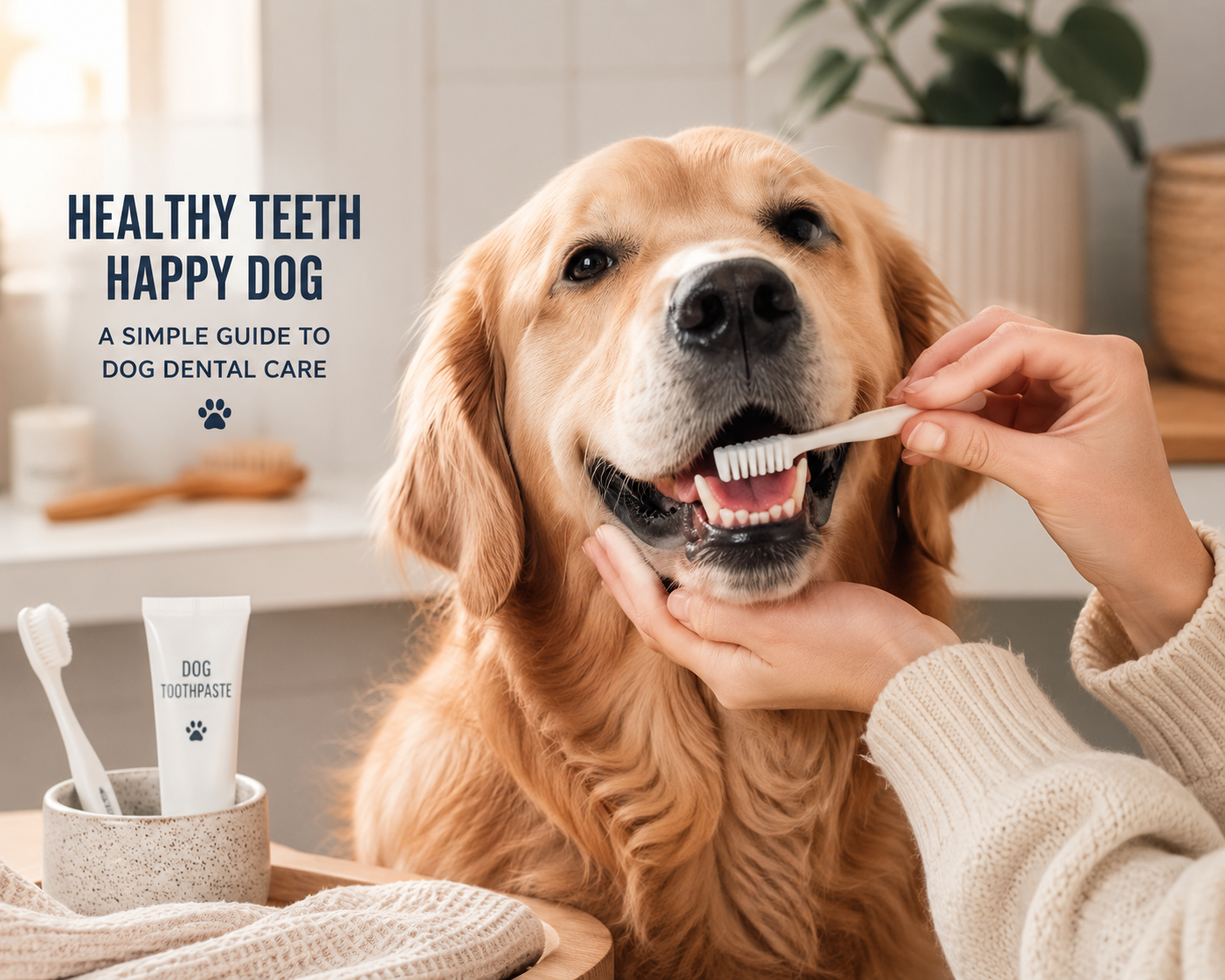
Your dog's oral health is about much more than fresh breath. Dental disease is one of the most common health problems in dogs, and it often develops silently long before obvious symptoms appear. The good news is that a simple home dental care routine can dramatically reduce plaque buildup, improve gum health, and help your dog stay healthier for years to come.
This guide explains how to care for your dog's teeth at home, how often to brush them, which products actually work, and when it's time to visit your veterinarian.
Why Dog Dental Care Matters
Plaque begins forming on your dog's teeth within hours after eating. If it isn't removed regularly, it hardens into tartar, leading to gingivitis and eventually periodontal disease. Veterinary organizations estimate that most dogs show signs of periodontal disease by around three years of age.
- Red or swollen gums
- Persistent bad breath
- Tartar buildup
- Pain while chewing
- Loose or missing teeth
- Difficulty eating
- Drooling or pawing at the mouth
Untreated dental disease can affect your dog's comfort and quality of life, making prevention one of the most valuable parts of routine care.
The Gold Standard: Brushing Your Dog's Teeth
Daily brushing is the most effective way to remove plaque before it turns into tartier deposits. Even brushing several times each week provides meaningful benefits.
What You'll Need
- Dog-specific toothpaste
- Soft dog toothbrush or finger brush
- High-value treats for rewards
- Patience and consistency
Never use human toothpaste. Many contain fluoride or xylitol, which can be harmful or toxic to dogs.
How to Brush Your Dog's Teeth
- Choose a calm, quiet environment.
- Let your dog taste the toothpaste first.
- Lift the lip gently without forcing the mouth open.
- Brush the outside surfaces of the teeth using small circular motions.
- Focus on the gumline where plaque accumulates.
- Keep sessions short and reward your dog afterward.
Most dogs become more cooperative when brushing is introduced gradually and associated with positive experiences.
How Often Should You Brush?
| Frequency | Benefit |
|---|---|
| Daily | Best protection against plaque and gum disease. |
| 3–5 times per week | Good reduction in plaque buildup. |
| Once weekly | Better than nothing but less effective. |
Helpful Dental Products for Dogs
Brushing works best when combined with other evidence-based dental products.
Dental Chews
Look for products carrying the Veterinary Oral Health Council (VOHC) Seal of Acceptance. These products have been independently evaluated for reducing plaque and/or tartar.
Dental Diets
Some specially formulated veterinary diets help reduce plaque through their texture and composition. Ask your veterinarian whether a dental diet is appropriate for your dog.
Water Additives
Water additives may provide additional support but should not replace brushing.
Dental Wipes and Oral Gels
These are useful alternatives for dogs that are still learning to tolerate brushing.
Common Mistakes to Avoid
- Using human toothpaste.
- Waiting until your dog has bad breath before starting dental care.
- Skipping regular brushing.
- Assuming dental treats replace brushing.
- Giving extremely hard chews that may fracture teeth.
Signs Your Dog Needs a Veterinary Dental Examination
Schedule a veterinary dental check if you notice:
- Bad breath that persists.
- Bleeding gums.
- Loose or broken teeth.
- Difficulty chewing.
- Swelling around the mouth.
- Visible heavy tartar.
- Changes in appetite.
Professional dental examinations and cleanings remain an important part of preventive care because disease below the gumline cannot be treated with home care alone.
Frequently Asked Questions
Can puppies have their teeth brushed?
Yes. Introducing brushing during puppyhood helps create a lifelong habit.
Are dental chews enough?
No. Dental chews can help reduce plaque, but daily brushing remains the most effective home-care method.
Can I remove tartar at home?
Once plaque hardens into tartar, it generally requires professional veterinary cleaning for safe removal.
What toothpaste should I use?
Choose a toothpaste made specifically for dogs. Poultry, beef, or peanut butter flavors are often well accepted.
Key Takeaways
- Daily brushing is the best way to protect your dog's teeth.
- Never use human toothpaste.
- Choose VOHC-approved dental products whenever possible.
- Dental chews and diets support—but do not replace—brushing.
- Regular veterinary dental examinations help detect hidden problems early.
Sources
- American Animal Hospital Association (AAHA) – Dog & Cat Dental Disease
- AAHA Dental Care Guidelines for Dogs and Cats
- Veterinary Oral Health Council (VOHC) – Accepted Products
- Veterinary Oral Health Council – Brushing Guidance
- World Small Animal Veterinary Association (WSAVA) – Global Dental Guidelines
Get Printable Dog Planners & Trackers at Happy Paw Studio
Looking for instant printable dog health logs, pet care planners, and daily routine journals? Visit our Etsy store to download yours today!
Shop HappyPawStudio1 on Etsy →