How to Choose a Crash-Tested Dog Car Safety Harness (And Why It Matters)
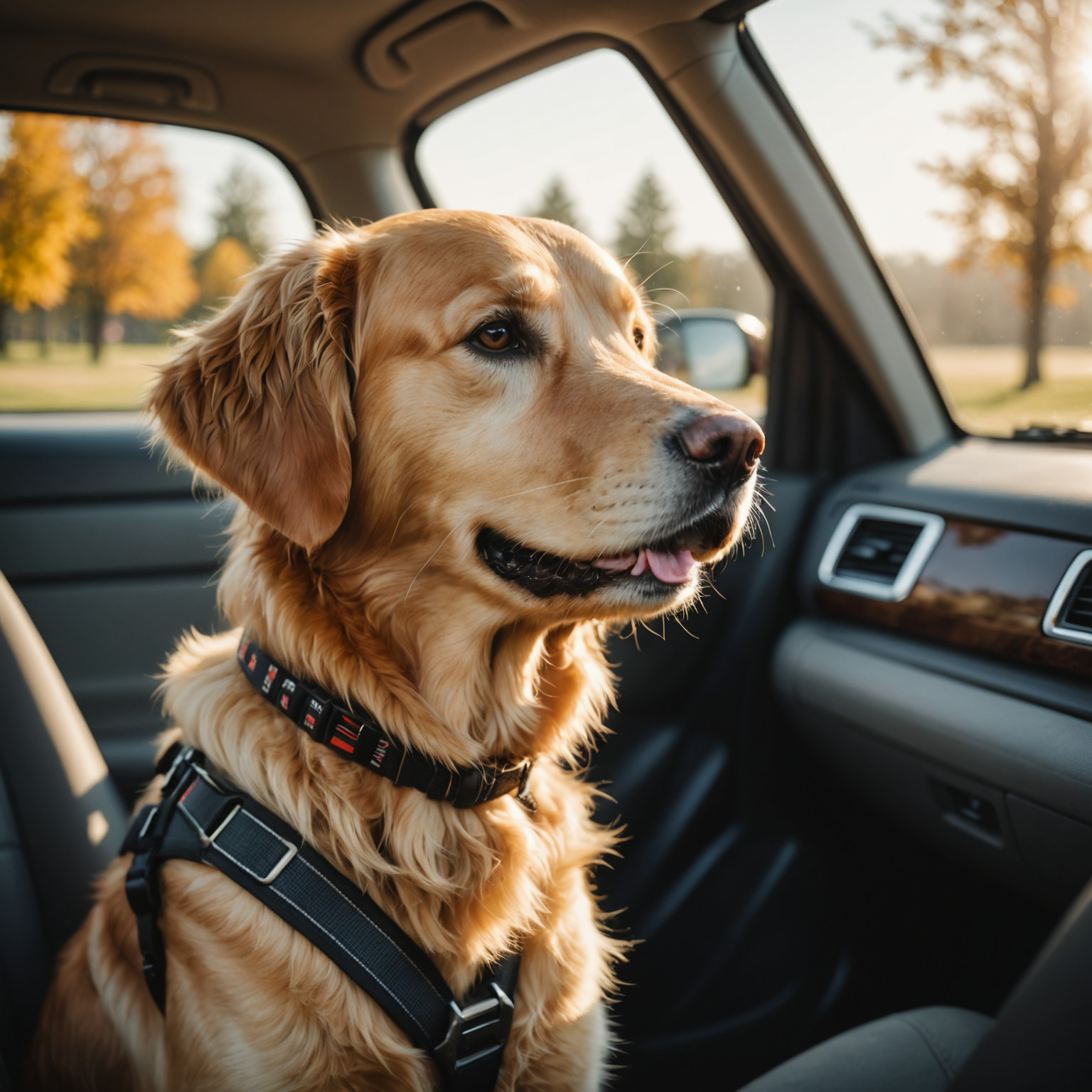
Every dog parent knows the joy of watching their pup stick their nose out the car window, ears flapping in the breeze. But as adorable as that moment is, traveling with an unrestrained dog in the car is one of the most overlooked safety risks for both pets and their people. If you've been meaning to look into a crash-tested dog car safety harness, you're already thinking in the right direction — and this guide is here to help you make the best choice for your furry co-pilot.
Whether you're heading to the vet, embarking on a road trip, or just running weekend errands, a properly fitted, crash-tested harness can make all the difference in an emergency. Not all dog car harnesses are created equal, though, and the difference between a "car harness" and a crash-tested car harness is significant. Let's walk through everything you need to know to keep your dog safe on every ride.
- Why Car Safety Harnesses Matter for Dogs
- What "Crash-Tested" Actually Means
- How to Choose the Right Harness for Your Dog
- Top Features to Look For
- How to Properly Fit a Dog Car Harness
- How to Use the Harness Correctly in the Car
- Common Mistakes to Avoid
- Frequently Asked Questions
Why Car Safety Harnesses Matter for Dogs
It might surprise you to learn that an unrestrained 10-pound dog in a 30 mph crash can generate over 300 pounds of force. For larger dogs, that number climbs dramatically. In a collision, an unrestrained pet becomes a projectile — putting themselves, you, and other passengers at serious risk of injury.
Beyond crash scenarios, unrestrained dogs can distract drivers, which is a leading cause of accidents in itself. Some states and countries have laws requiring pets to be restrained while in a moving vehicle, so a car harness isn't just a safety measure — it may also be a legal one depending on where you live.
A crash-tested dog car safety harness is specifically designed and independently tested to withstand the forces of a real collision, keeping your dog secured in their seat and reducing the risk of injury to everyone in the vehicle.
What "Crash-Tested" Actually Means
This is where things get really important. The term "crash-tested" gets thrown around loosely in pet product marketing, so it's worth understanding what legitimate crash testing actually involves.
The Center for Pet Safety (CPS)
The most recognized independent organization for pet travel product testing in the United States is the Center for Pet Safety (CPS). They conduct rigorous crash simulation tests using weighted dog proxies and evaluate harnesses based on their ability to restrain a dog during a collision without breaking, detaching, or causing injury.
A harness that has been CPS-certified has passed standardized crash tests and met specific safety benchmarks. This is the gold standard you should look for when shopping.
What to Watch Out For
Many harnesses on the market are marketed as "crash-tested" but have not been independently certified. Some brands conduct their own internal testing, which may not meet the same standards as third-party evaluation. Always look for:
- CPS certification or another recognized independent safety certification
- Transparent testing data from the manufacturer
- Clear labeling about what crash speed and force the harness was tested at
If a brand can't tell you who tested their harness and how, that's a red flag worth taking seriously.
How to Choose the Right Harness for Your Dog
Choosing the right crash-tested harness involves more than just picking the right size. Here's a step-by-step approach to finding the best fit for your specific dog.
Step 1: Measure Your Dog Accurately
Before you buy anything, grab a soft measuring tape and measure:
- Girth (the widest part of your dog's chest, just behind the front legs)
- Neck circumference
- Body length (from the base of the neck to the base of the tail)
- Weight
Most harness brands provide sizing charts based on these measurements. Never guess — an ill-fitting harness won't perform as intended in a crash, even if it's certified.
Step 2: Consider Your Dog's Body Type
Some dogs have deep chests (like Greyhounds or Whippets), barrel chests (like Bulldogs), or very narrow frames (like Italian Greyhounds). Look for harnesses that are designed with your dog's body shape in mind, or that offer adjustable straps across multiple points for a more customized fit.
Step 3: Think About Your Dog's Temperament
Does your dog get anxious in the car? Do they tend to wiggle and squirm? Some harnesses are designed with extra padding and a snug, vest-style fit that can feel more calming for anxious dogs. Others are more minimal and lightweight for dogs who travel comfortably.
Top Features to Look For
When evaluating crash-tested dog car harnesses, keep an eye out for these key features:
- Independent crash-test certification (CPS or equivalent)
- Wide, padded chest plate to distribute force across the body rather than concentrating it on one point
- Multiple adjustment points for a secure, customized fit
- Strong, reinforced stitching and durable hardware (look for steel or heavy-duty plastic buckles)
- Dual attachment points — one for the car's seatbelt and one for walking, so you don't need a separate walking harness
- Escape-proof design for dogs who are skilled at wriggling out of gear
- Easy on/off functionality so you're not wrestling with buckles every time you get in the car
Some well-regarded brands that have received CPS certification or strong independent testing results include Sleepypod Clickit Sport, Ruffwear Load Up, and Kurgo Tru-Fit. Always verify current certification status directly with the manufacturer or the CPS website, as certifications can change.
How to Properly Fit a Dog Car Harness
Even the best crash-tested harness won't protect your dog if it doesn't fit correctly. Here's how to get the fit right:
The Two-Finger Rule
Once the harness is on, you should be able to slide two fingers comfortably under any strap — but no more than that. If you can fit your whole hand under a strap, it's too loose. If you can't fit two fingers, it's too tight.
Check the Chest Plate Position
The chest plate or front panel should sit flat against your dog's sternum, not riding up toward their throat or slipping down toward their belly. Adjust the shoulder and belly straps until the plate sits centered and snug.
Do a Wiggle Test
Before you ever put your dog in the car, do a quick wiggle test at home. Gently try to slip the harness over your dog's head or pull it backward. If it moves significantly or your dog can back out of it, readjust or try a different size.
Recheck Fit Regularly
Dogs' bodies change — especially puppies, senior dogs, or dogs who gain or lose weight. Check the fit of the harness every few months and after any significant weight change.
How to Use the Harness Correctly in the Car
Putting the harness on correctly is only half the equation. Here's how to use it properly once you're in the vehicle:
- Always use the back seat. The back seat is the safest place for your dog. Airbags in the front seat can seriously injure or kill a dog in a crash.
- Attach the harness to the seatbelt latch. Most crash-tested harnesses come with a short tether that clips into the seatbelt buckle. Use this — don't clip the harness to a door handle or headrest.
- Keep the tether short. A shorter tether means less movement in a crash. Your dog should be able to sit, lie down, and turn around comfortably, but shouldn't have enough slack to launch forward.
- Never attach to a collar. Always attach the seatbelt tether to the harness, never to a collar. In a crash, a collar attachment can cause serious neck injuries.
Common Mistakes to Avoid
Even well-meaning dog parents make these common errors:
- Buying based on price alone. Cheaper harnesses are often not crash-tested. This is one area where investing a little more is genuinely worth it.
- Using a walking harness as a car harness. Standard walking harnesses are not designed to withstand crash forces. Use a harness specifically rated for car travel.
- Skipping the fit check. A harness that fits perfectly in the store may shift after a few uses. Make fitting checks part of your routine.
- Letting your dog hang out the window while harnessed. The harness is for crash protection, not for window-hanging adventures. Keep windows at a safe level.
Frequently Asked Questions
Do I really need a crash-tested harness, or will any harness do?
A standard harness — even a well-made one — is not designed to withstand the forces of a vehicle collision. Only harnesses that have been independently crash-tested and certified are proven to provide meaningful protection in an accident. It's absolutely worth the investment.
Can I use a crate instead of a harness?
Yes! A crash-tested travel crate secured to the vehicle is another excellent option, particularly for smaller dogs. The key word is crash-tested — the crate itself needs to be rated for vehicle use and properly secured so it doesn't become a projectile.
What's the safest place in the car for my dog?
The back seat is the safest location. The cargo area of an SUV or hatchback can also work well with a secured crate or cargo barrier, but the back seat with a crash-tested harness is generally considered the gold standard.
How do I get my dog comfortable wearing a car harness?
Start by letting your dog wear the harness around the house for short periods before introducing it in the car. Pair it with treats and praise so your dog builds a positive association. Gradually increase car time as your dog becomes more comfortable.
Are crash-tested harnesses available for all dog sizes?
Most reputable brands offer sizing from small to extra-large. However, very small dogs (under 5 lbs) and very large dogs (over 100 lbs) may have fewer certified options available. Contact the manufacturer directly if you're unsure about sizing for an unusually small or large dog.
Your Dog Deserves a Safe Ride
Keeping your dog safe in the car doesn't have to be complicated — it just takes a little knowledge and the right gear. A crash-tested dog car safety harness is one of the most important investments you can make as a dog parent, and once you find the right fit, it becomes a seamless part of every trip you take together.
At Happy Paw Studio, we believe every dog deserves to arrive safely — whether it's a quick trip to the park or a cross-country adventure. Take the time to measure your dog, research certified options, and get the fit right. Your pup is counting on you, and you've absolutely got this.
Have a harness you love or a question we didn't cover? Drop it in the comments — we'd love to hear from you! 🐾
Sources
- Center for Pet Safety (centerforpetsafety.org) — Referenced for crash-testing standards, certification criteria, and the use of weighted dog proxies in safety evaluations.
- American Kennel Club / AKC (akc.org) — General guidance on dog car safety, restraint recommendations, and traveling safely with dogs.
- Ruffwear (ruffwear.com) — Referenced as a brand with independently tested car harness products; manufacturer safety and product information.
- Sleepypod (sleepypod.com) — Referenced as a CPS-certified harness brand; manufacturer safety testing documentation.
- Kurgo (kurgo.com) — Referenced as a brand with crash-tested travel harness options; manufacturer product and safety information.
- Insurance Institute for Highway Safety / IIHS (iihs.org) — General context for understanding crash force physics and vehicle safety standards applicable to pet restraint discussions.
Get Printable Dog Planners & Trackers at Happy Paw Studio
Looking for instant printable dog health logs, pet care planners, and daily routine journals? Visit our Etsy store to download yours today!
Shop HappyPawStudio1 on Etsy →